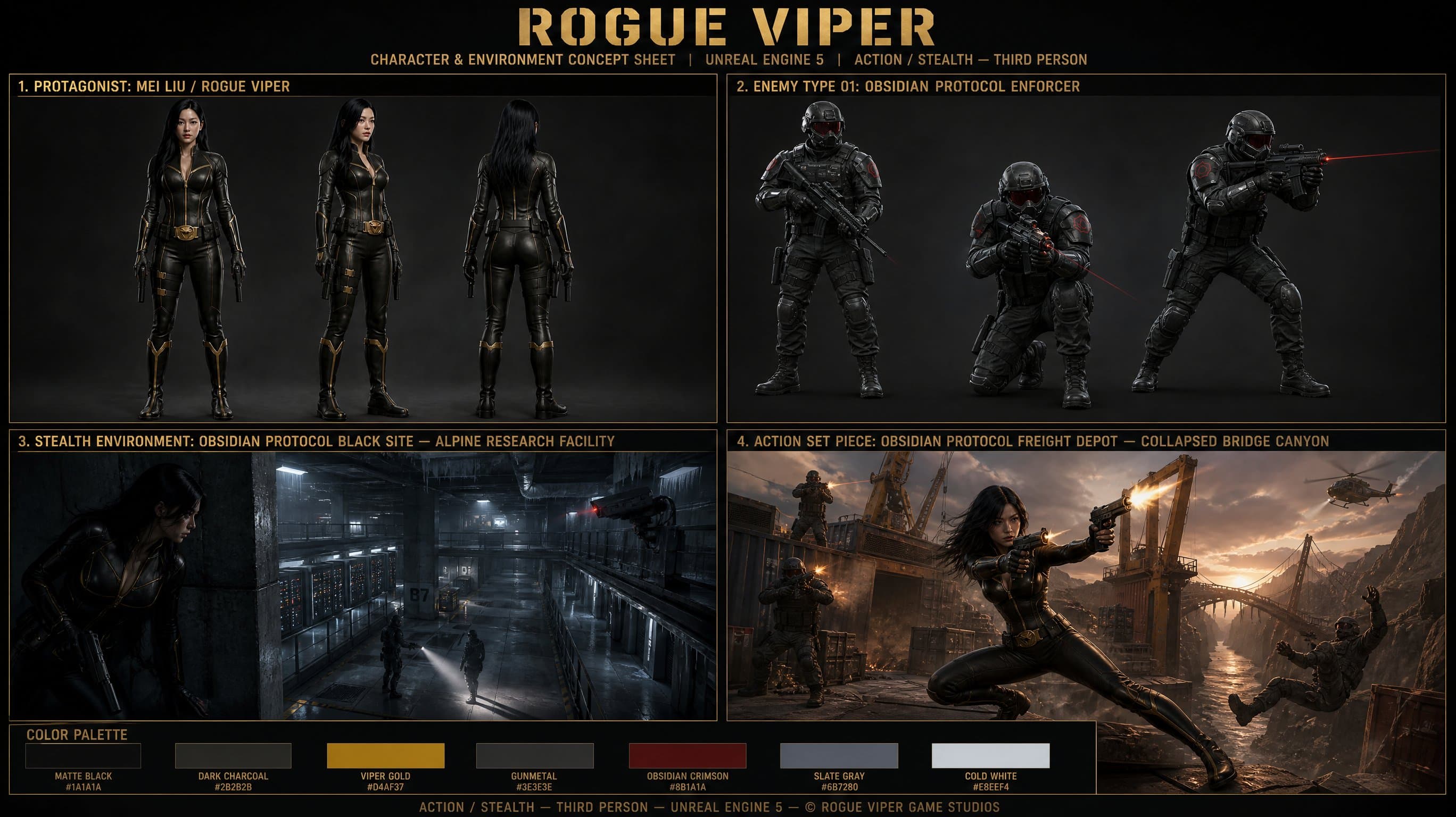
Create a cinematic game concept sheet for an original stealth action game titled "Rogue Viper". Layout: a wide 16:9 production board divided into four labeled panels. Panel 1 shows the protagonist full-body character turnaround, front view, side view, and back view, wearing a matte black tactical suit with subtle gold accents. Panel 2 shows enemy enforcer variations in black armor with red visor details, including standing, crouching, and aiming poses. Panel 3 shows a dark alpine black-site research facility environment with cold lighting, industrial walkways, server racks, patrol lights, and stealth mood. Panel 4 shows an action set piece at a collapsed freight depot bridge during sunset, with the protagonist firing pistols, enemies in motion, dust, sparks, helicopters, and cinematic depth. Add a restrained color palette strip at the bottom with matte black, charcoal, gold, gunmetal, deep red, slate gray, and cold white. Style: AAA game art direction board, Unreal Engine concept art, cinematic lighting, realistic character design, tactical materials, readable production layout, high detail.
Negative prompt
existing franchise characters, copyrighted game logos, messy layout, unreadable labels, low-detail armor, flat lighting, cartoon style, duplicated limbs, muddy panels
How to adapt this prompt
Turn the example into your own brief.
Replace the subject, product, place, or audience.Keep the composition and camera language, then swap the object, brand, city, or customer.Preserve lighting and material constraints.Reuse the lighting, texture, and finish details that make the image feel specific.Match the aspect ratio to the channel.Move between square, vertical, and wide crops based on ads, posts, covers, or landing pages.Tighten the negative prompt after review.Add exclusions for text errors, distorted objects, clutter, or style drift after the first result. What this prompt is good for
Rogue Viper Game Concept Sheet is built for AI game concept sheet prompt example for character and environment design.
Use this AI image prompt when you need a focused Editorial Visuals result with a clear style direction, a defined format, and enough visual constraints to avoid generic output.
- Best search intent: AI game concept sheet prompt example, Character design, and Stealth action game art
- Primary workflow: AI game concept sheet prompt example for character and environment design
- Recommended output format: 16:9
Prompt breakdown
Key controls inside this Cinematic AAA game concept sheet prompt.
The prompt combines subject direction, lighting, composition, visual style, and output quality in one reusable brief. Keep those constraints together when you adapt it for your own image.
- Style anchor: Cinematic AAA game concept sheet
- Category context: Editorial Visuals
- Includes a negative prompt to reduce style drift, distorted details, and unwanted artifacts.
Best variations to try
Adapt this prompt without losing the original image logic.
Start by changing the subject, product, place, color palette, or audience. Keep the camera language and visual hierarchy stable until the result matches the page, ad, post, or campaign you are building.
- Swap the subject while keeping the 16:9 composition.
- Turn the style into a new campaign by changing colors, wardrobe, props, or location.
- Use the prefilled generator link to test the prompt, then refine one variable at a time.
Internal prompt paths
Explore more Editorial Visuals prompts.
Browse nearby workflows, compare prompt packs, or open the generator with this example already loaded.
Prompt FAQ
Common questions about this AI image prompt.
What can I create with the Rogue Viper Game Concept Sheet prompt?
You can use it to create AI game concept sheet prompt example for character and environment design in a Cinematic AAA game concept sheet style, with a recommended 16:9 aspect ratio and search-friendly image direction.
Can I edit this AI image prompt for another subject?
Yes. Replace the subject, product, place, audience, or brand details while preserving the lighting, composition, aspect ratio, and quality constraints that give the prompt its structure.
Which aspect ratio works best for this prompt?
This example is designed around a 16:9 aspect ratio. You can change it for another channel, but keep the framing and hierarchy consistent when moving to square, vertical, or wide formats.
Should I use the negative prompt?
Yes. The negative prompt helps reduce issues such as existing franchise characters, copyrighted game logos, messy layout, unreadable labels, low-detail armor, flat lighting, cartoon style, duplicated limbs, muddy panels. Use it as a starting point and add exclusions after reviewing your first result.