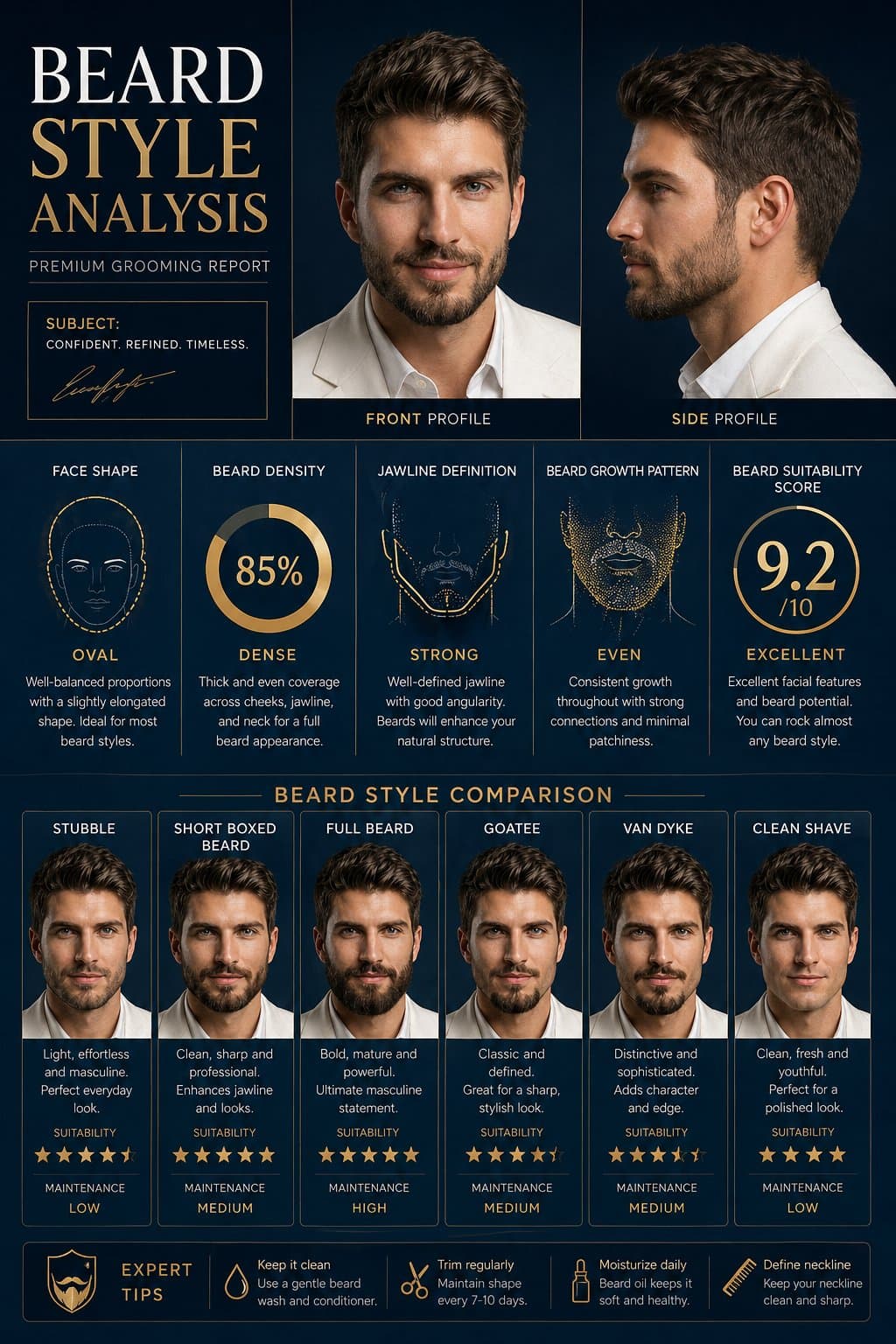
Create a premium "BEARD STYLE ANALYSIS" poster for an adult male grooming reference.
Main image: use one adult male model with a clean, confident expression, natural skin texture, realistic facial hair, and professional studio lighting. Keep the same face consistent across all comparison modules.
Layout: modern editorial infographic with a strong portrait area, side panels, clean dividers, refined icons, and premium grooming-magazine typography.
Analysis modules:
- Face Shape: describe the visible face structure with a simple icon and short note.
- Beard Density: show cheek, jaw, chin, and moustache coverage with clear visual markers.
- Jawline Definition: explain how facial hair can sharpen or soften the lower face.
- Growth Pattern: map direction, patchiness, neckline, cheek line, and moustache connection.
- Best Styles: compare 4 to 6 beard styles such as short boxed beard, full beard, anchor beard, goatee, stubble, and beardstache.
- Suitability Score: include a polished rating system that feels editorial, not medical.
Design style: black, warm beige, muted gold, and soft grey palette; sharp typography; subtle grid lines; realistic grooming photography; premium barber consultation board.
Style: AI beard style analysis prompt example, BEARD STYLE ANALYSIS poster, men grooming infographic, barber style guide, facial hair recommendation visual.
Negative prompt
child subject, celebrity likeness, medical diagnosis, insulting language, exaggerated masculinity, fake brand logo, distorted face, unreadable labels, messy chart layout, duplicate faces with different identity
Prompt-specific breakdownWhat makes this prompt different.
Subject and sceneCreate a premium "BEARD STYLE ANALYSIS" poster for an adult male grooming reference
Keep this cue visible when adapting the prompt for another ai beard style analysis prompt example for men grooming guides, barber shop content, style consultation posters, and facial hair recommendation visuals image.Composition and hierarchyMain image: use one adult male model with a clean, confident expression, natural skin texture, realistic facial hair, and professional studio lighting
Review text carefully after generation because typography is often the first place image models drift.Lighting and material cuesKeep the same face consistent across all comparison modules
Treat this as the quality control layer for the premium grooming analysis infographic look.Style and output constraintsLayout: modern editorial infographic with a strong portrait area, side panels, clean dividers, refined icons, and premium grooming-magazine typography
Review text carefully after generation because typography is often the first place image models drift. Variation promptsRewrite this example for nearby use cases.
These variations keep the core image logic from this prompt while changing one variable at a time.
Change the subject
Create a 2:3 editorial visuals image for [new subject]. Keep this prompt logic: Create a premium "BEARD STYLE ANALYSIS" poster for an adult male grooming reference. Use Premium grooming analysis infographic styling for AI beard style analysis prompt example for men grooming guides, barber shop content, style consultation posters, and facial hair recommendation visuals, but replace the product, character, place, or audience with [your brief].
Change the channel
Adapt this concept for [ad, product page, thumbnail, story, poster, or hero image]. Preserve the Main image: use one adult male model with a clean, confident expression, natural skin texture, realistic facial hair, and professional studio lighting and keep the result focused on AI beard style analysis prompt example for men grooming guides, barber shop content, style consultation posters, and facial hair recommendation visuals. Adjust crop, spacing, and visual hierarchy for the new channel.
Change the visual mood
Generate a new version with [brighter, darker, more premium, more playful, more editorial, or more minimal] mood. Keep Keep the same face consistent across all comparison modules as the style anchor and avoid changing the core subject unless the brief requires it.
Review checklistCheck the generated image before reusing it.
- Confirm the image clearly supports AI beard style analysis prompt example for men grooming guides, barber shop content, style consultation posters, and facial hair recommendation visuals and does not drift into a generic editorial visuals result.
- Check the main prompt cue: Create a premium "BEARD STYLE ANALYSIS" poster for an adult male grooming reference
- Review the 2:3 crop for subject placement, negative space, and channel fit.
- Compare the output against the intended premium grooming analysis infographic style before publishing or reusing it.
- Use the negative prompt to reduce these known issues: child subject, celebrity likeness, medical diagnosis, insulting language, exaggerated masculinity, fake brand logo, distorted face, unreadable labels, messy chart layout, duplicate faces with different identity
Internal prompt paths
Explore more Editorial Visuals prompts.
Browse nearby workflows, compare prompt packs, or open the generator with this example already loaded.
Prompt FAQCommon questions about this AI image prompt.
What can I create with the Beard Style Analysis Poster prompt?
You can use it to create AI beard style analysis prompt example for men grooming guides, barber shop content, style consultation posters, and facial hair recommendation visuals in a Premium grooming analysis infographic style, with a recommended 2:3 aspect ratio and search-friendly image direction.
Can I edit this AI image prompt for another subject?
Yes. Replace the subject, product, place, audience, or brand details while preserving the lighting, composition, aspect ratio, and quality constraints that give the prompt its structure.
Which aspect ratio works best for this prompt?
This example is designed around a 2:3 aspect ratio. You can change it for another channel, but keep the framing and hierarchy consistent when moving to square, vertical, or wide formats.
Should I use the negative prompt?
Yes. The negative prompt helps reduce issues such as child subject, celebrity likeness, medical diagnosis, insulting language, exaggerated masculinity, fake brand logo, distorted face, unreadable labels, messy chart layout, duplicate faces with different identity. Use it as a starting point and add exclusions after reviewing your first result.