Use an uploaded face image as the primary identity reference. Preserve the facial identity with high fidelity, including facial structure, jawline, cheekbones, eye shape, eyebrows, nose, lips, beard pattern, hairstyle, hair texture, skin tone, and realistic skin texture.
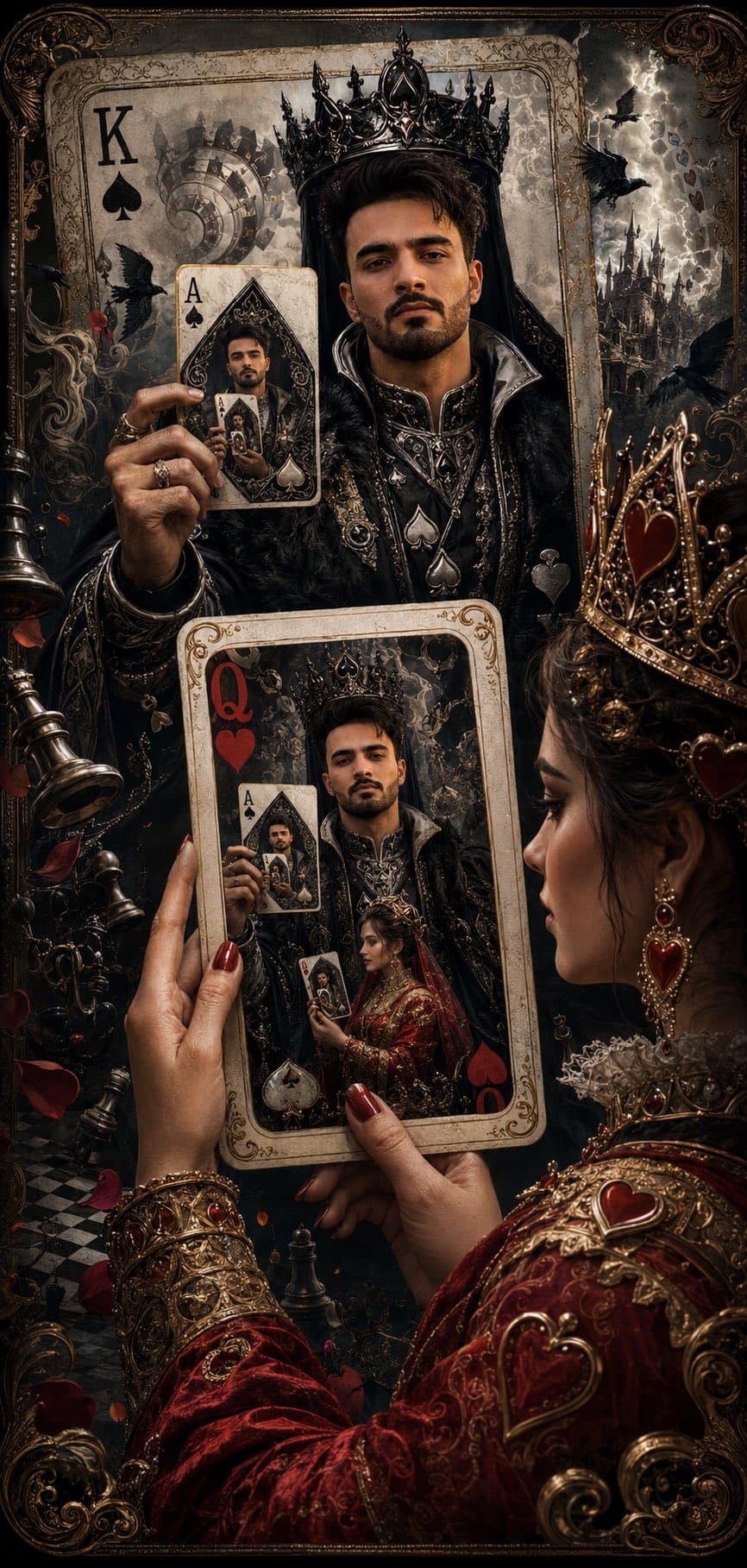
Create an ultra-detailed cinematic surreal luxury playing-card artwork. The main subject appears as the King of Spades, occupying the full design of a magnificent royal playing card. The subject wears elaborate black-and-silver spade-themed regalia, a crown forged from obsidian and polished steel, intricate embroidered armor, and flowing royal garments decorated with subtle spade symbols. The expression is calm, intelligent, and powerful.
In the right hand, the King of Spades holds a pristine Ace of Spades card. The creative twist: the Ace of Spades contains another complete playing-card illustration. Inside that card, the same King of Spades appears again, and that card is being elegantly held between the fingers of a majestic Queen of Hearts. The Queen is graceful, regal, and visually striking, dressed in rich crimson and gold royal attire with heart motifs.
Build a subtle recursive visual paradox with card-world folding, floating spade and heart symbols, ravens, rose petals, ornate golden borders, royal chess pieces suspended in the air, fractal engravings, elegant smoke suit symbols, and dimensional portals emerging from the card corners.
Style: ultra-realistic fantasy realism mixed with luxury casino art, Renaissance royal portraiture, and modern cinematic concept art. Use dramatic chiaroscuro, volumetric god rays, rich contrast, glowing metallic highlights, deep blacks, silver chrome, ivory white, crimson red, and antique gold accents.
Negative prompt
low identity fidelity, distorted face, messy card layout, unreadable suit symbols, cheap casino poster, flat lighting, weak recursion, cluttered borders, warped hands, low-detail engravings
How to adapt this prompt
Turn the example into your own brief.
Replace the subject, product, place, or audience.Keep the composition and camera language, then swap the object, brand, city, or customer.Preserve lighting and material constraints.Reuse the lighting, texture, and finish details that make the image feel specific.Match the aspect ratio to the channel.Move between square, vertical, and wide crops based on ads, posts, covers, or landing pages.Tighten the negative prompt after review.Add exclusions for text errors, distorted objects, clutter, or style drift after the first result. What this prompt is good for
Recursive King of Spades Card Art is built for AI playing card art prompt example for fantasy covers and collectible card concepts.
Use this AI image prompt when you need a focused Editorial Visuals result with a clear style direction, a defined format, and enough visual constraints to avoid generic output.
- Best search intent: AI playing card art prompt example, King of Spades, and Fantasy card design
- Primary workflow: AI playing card art prompt example for fantasy covers and collectible card concepts
- Recommended output format: 1:2
Prompt breakdown
Key controls inside this Luxury surreal playing-card artwork prompt.
The prompt combines subject direction, lighting, composition, visual style, and output quality in one reusable brief. Keep those constraints together when you adapt it for your own image.
- Style anchor: Luxury surreal playing-card artwork
- Category context: Editorial Visuals
- Includes a negative prompt to reduce style drift, distorted details, and unwanted artifacts.
Best variations to try
Adapt this prompt without losing the original image logic.
Start by changing the subject, product, place, color palette, or audience. Keep the camera language and visual hierarchy stable until the result matches the page, ad, post, or campaign you are building.
- Swap the subject while keeping the 1:2 composition.
- Turn the style into a new campaign by changing colors, wardrobe, props, or location.
- Use the prefilled generator link to test the prompt, then refine one variable at a time.
Prompt FAQ
Common questions about this AI image prompt.
What can I create with the Recursive King of Spades Card Art prompt?
You can use it to create AI playing card art prompt example for fantasy covers and collectible card concepts in a Luxury surreal playing-card artwork style, with a recommended 1:2 aspect ratio and search-friendly image direction.
Can I edit this AI image prompt for another subject?
Yes. Replace the subject, product, place, audience, or brand details while preserving the lighting, composition, aspect ratio, and quality constraints that give the prompt its structure.
Which aspect ratio works best for this prompt?
This example is designed around a 1:2 aspect ratio. You can change it for another channel, but keep the framing and hierarchy consistent when moving to square, vertical, or wide formats.
Should I use the negative prompt?
Yes. The negative prompt helps reduce issues such as low identity fidelity, distorted face, messy card layout, unreadable suit symbols, cheap casino poster, flat lighting, weak recursion, cluttered borders, warped hands, low-detail engravings. Use it as a starting point and add exclusions after reviewing your first result.