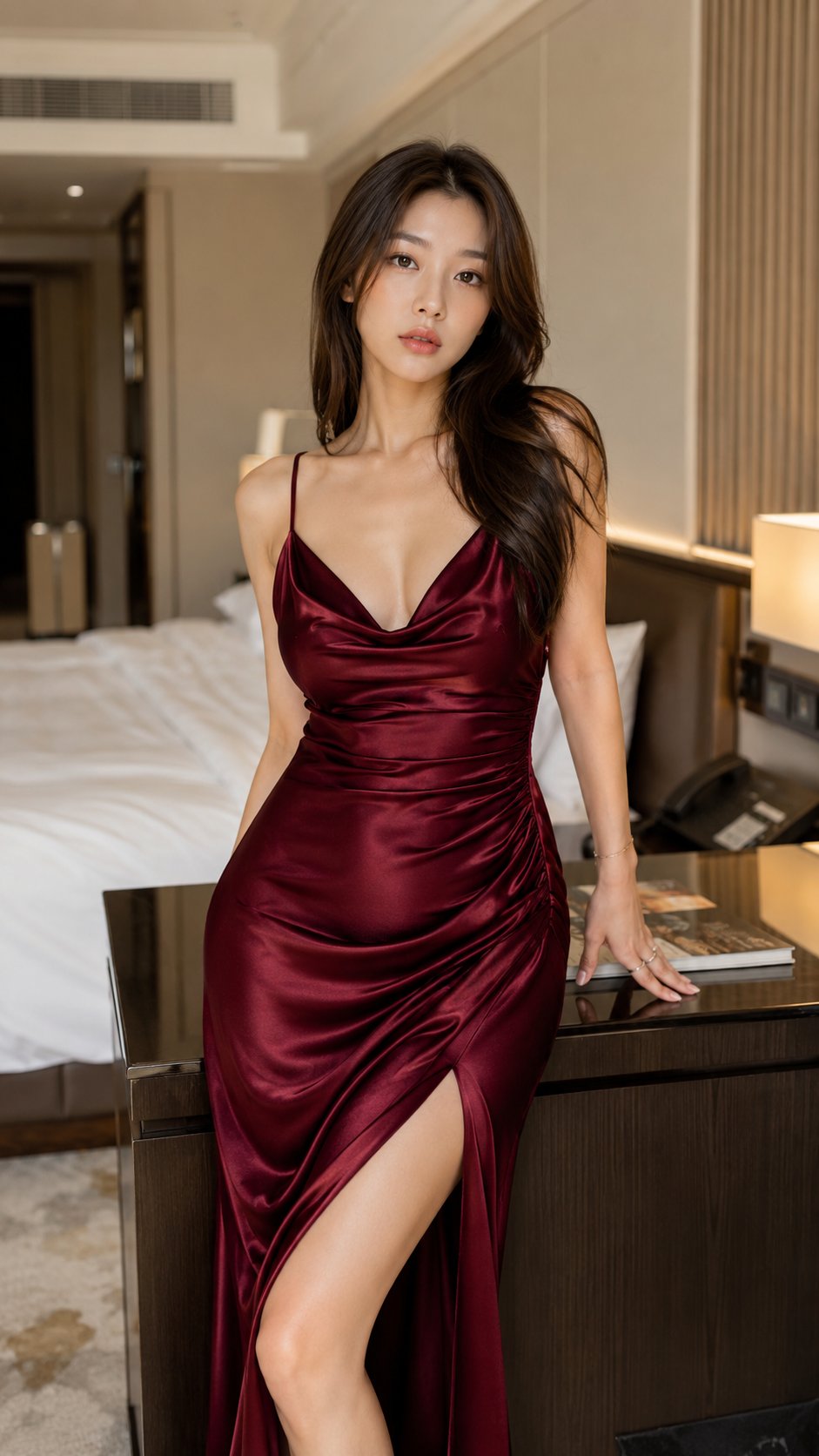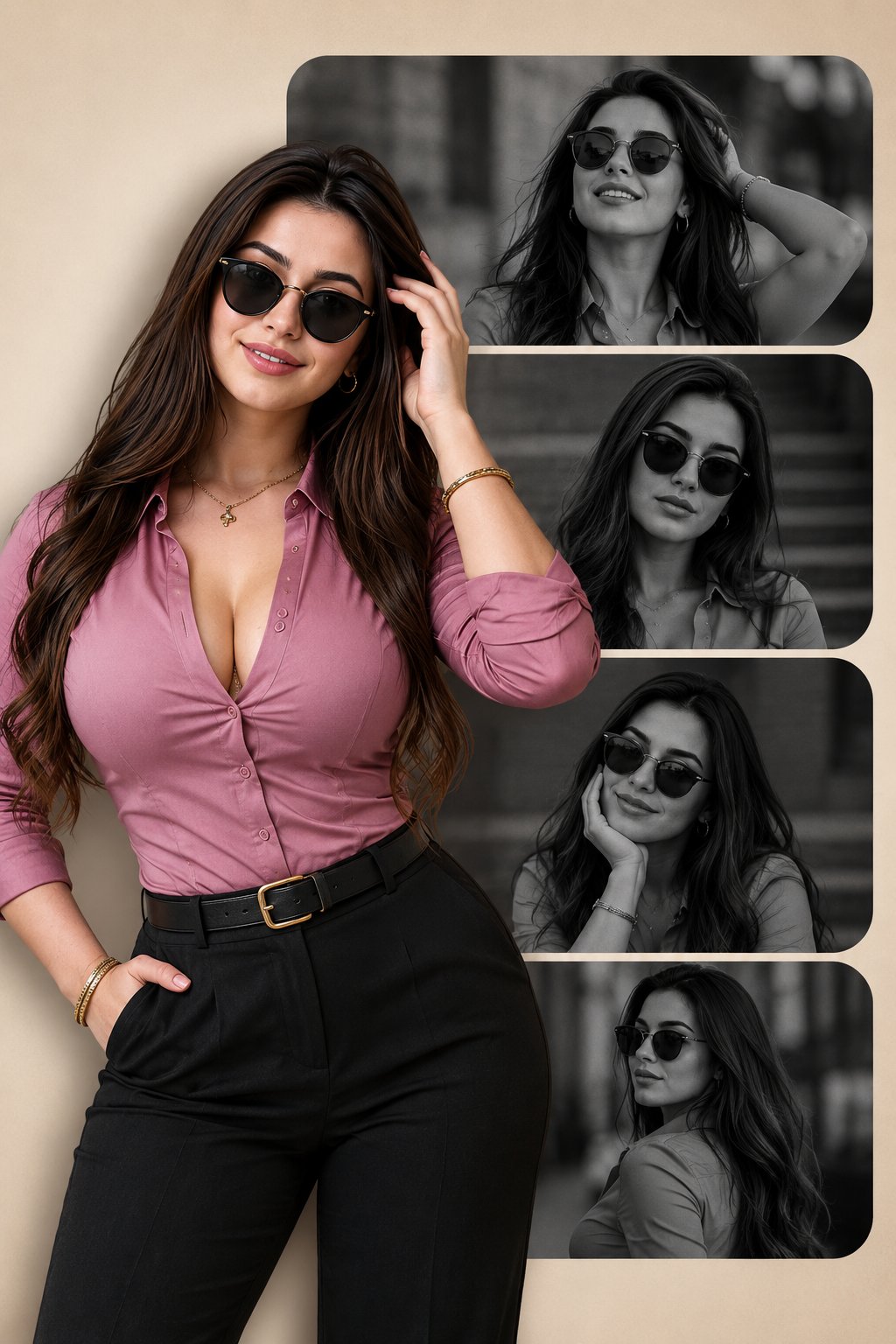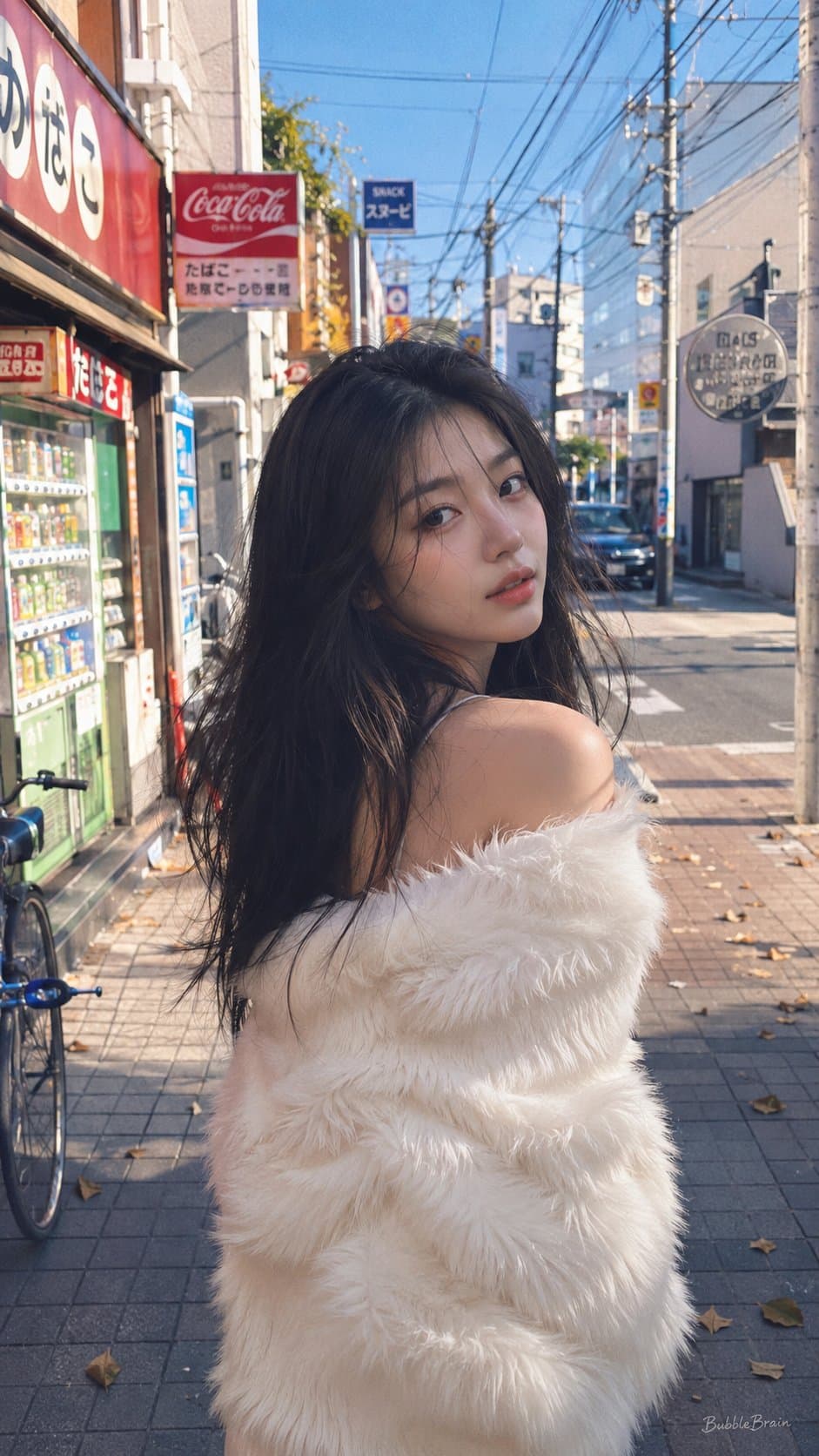
Create a cinematic film street portrait of a fashionable young adult in a narrow Tokyo backstreet at night. The mood should feel candid, stylish, and quietly cinematic, like a still from an independent fashion editorial.
Composition: 9:16 vertical frame, half-body portrait, subject slightly off-center, shallow depth of field, low-angle street perspective, glowing storefronts and lanterns receding into the background.
Subject: confident young adult with expressive eyes, natural makeup, layered streetwear, dark jacket, subtle accessories, relaxed pose, direct but calm eye contact. Clothing should feel modern, practical, and editorial without real brand logos.
Setting: Tokyo backstreet with wet pavement, vending-machine glow, tiny restaurant signs, warm lantern light, parked bicycle, overhead cables, narrow alley depth, and soft reflections after rain. Keep signage abstract or readable only as short generic English marks.
Photography: 35mm film look, visible grain, halation around lights, warm amber highlights, cool blue shadows, realistic skin texture, slight motion in the background, documentary fashion mood.
Style: AI film street portrait prompt example, Tokyo backstreet atmosphere, cinematic fashion photography, realistic street portrait, travel creator image, editorial film still.
Negative prompt
underage subject, real brand logo, copied celebrity, unreadable sign clutter, plastic skin, over-smoothed face, anime style, tourist postcard look, harsh HDR, distorted hands
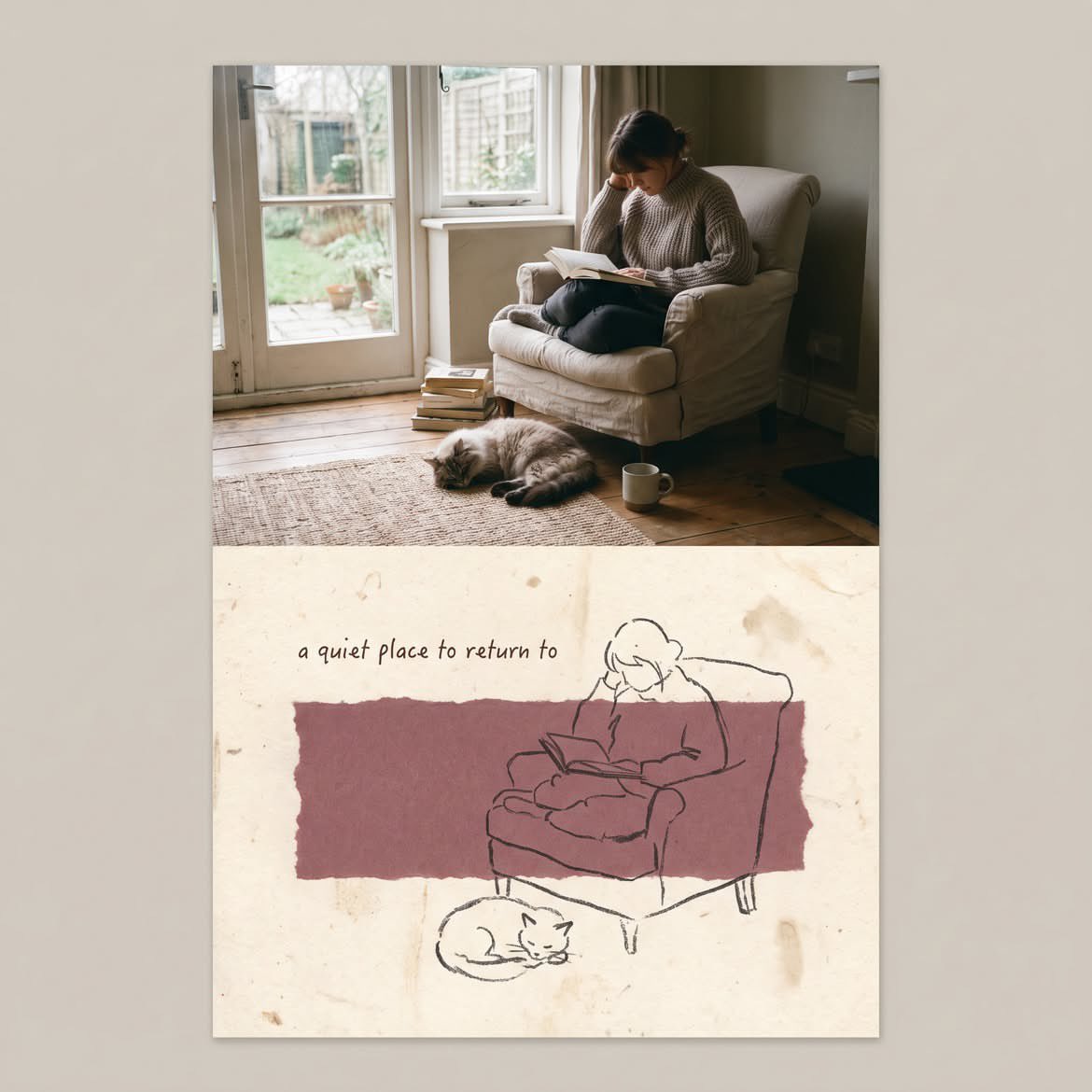
How to adapt this prompt
Turn the example into your own brief.
Replace the subject, product, place, or audience.Keep the composition and camera language, then swap the object, brand, city, or customer.Preserve lighting and material constraints.Reuse the lighting, texture, and finish details that make the image feel specific.Match the aspect ratio to the channel.Move between square, vertical, and wide crops based on ads, posts, covers, or landing pages.Tighten the negative prompt after review.Add exclusions for text errors, distorted objects, clutter, or style drift after the first result. What this prompt is good for
Tokyo Backstreet Film Portrait is built for AI film street portrait prompt example for travel creators, fashion posts, and cinematic lifestyle images.
Use this AI image prompt when you need a focused Social Media result with a clear style direction, a defined format, and enough visual constraints to avoid generic output.
- Best search intent: AI film street portrait prompt example, Tokyo backstreet, and Cinematic portrait
- Primary workflow: AI film street portrait prompt example for travel creators, fashion posts, and cinematic lifestyle images
- Recommended output format: 9:16
Prompt breakdown
Key controls inside this Candid film street portrait prompt.
The prompt combines subject direction, lighting, composition, visual style, and output quality in one reusable brief. Keep those constraints together when you adapt it for your own image.
- Style anchor: Candid film street portrait
- Category context: Social Media
- Includes a negative prompt to reduce style drift, distorted details, and unwanted artifacts.
Best variations to try
Adapt this prompt without losing the original image logic.
Start by changing the subject, product, place, color palette, or audience. Keep the camera language and visual hierarchy stable until the result matches the page, ad, post, or campaign you are building.
- Swap the subject while keeping the 9:16 composition.
- Turn the style into a new campaign by changing colors, wardrobe, props, or location.
- Use the prefilled generator link to test the prompt, then refine one variable at a time.
Prompt FAQ
Common questions about this AI image prompt.
What can I create with the Tokyo Backstreet Film Portrait prompt?
You can use it to create AI film street portrait prompt example for travel creators, fashion posts, and cinematic lifestyle images in a Candid film street portrait style, with a recommended 9:16 aspect ratio and search-friendly image direction.
Can I edit this AI image prompt for another subject?
Yes. Replace the subject, product, place, audience, or brand details while preserving the lighting, composition, aspect ratio, and quality constraints that give the prompt its structure.
Which aspect ratio works best for this prompt?
This example is designed around a 9:16 aspect ratio. You can change it for another channel, but keep the framing and hierarchy consistent when moving to square, vertical, or wide formats.
Should I use the negative prompt?
Yes. The negative prompt helps reduce issues such as underage subject, real brand logo, copied celebrity, unreadable sign clutter, plastic skin, over-smoothed face, anime style, tourist postcard look, harsh HDR, distorted hands. Use it as a starting point and add exclusions after reviewing your first result.